

Can Gen Z trust mortgage lenders?
What the data tells us:
New research reveals a striking confidence gap between Gen Z and the mortgage industry — and it isn’t about rejection or costs. It’s about uncertainty. Here’s what lenders need to understand, and what they can do differently.
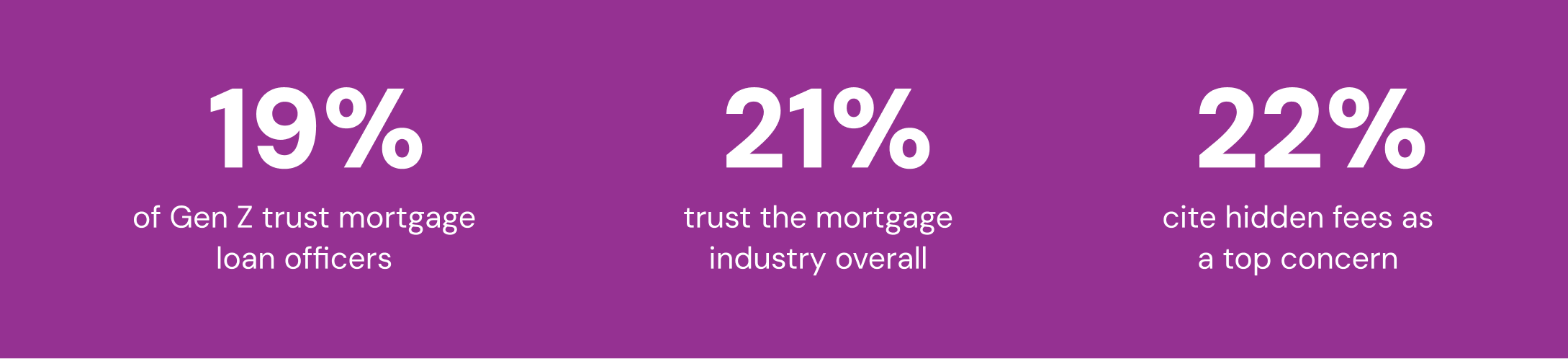
Trust has always been foundational to financial relationships. Consumers want to work with people and institutions they know, like, and trust. But recent Guild Mortgage and YouGov research conducted with Gen Z makes one thing clear: the mortgage industry has significant work to do.
Those numbers may seem discouraging at first glance, but they point to something more nuanced than outright rejection. Gen Z is not turning away from homeownership or the mortgage process. They are approaching it with measured caution. Understanding the reasons behind that caution is what makes the path forward clear.
Where the distrust actually comes from
Gen Z came of age during a period defined by economic instability, rising student debt, a global pandemic, and an unrelenting stream of stories about scams, hidden fees, and misleading financial practices. For many in this generation, skepticism is not hostility — it is self-protection.
That mindset came through clearly in the open-ended survey responses. Participants consistently pointed to honesty, clarity, and transparency as the qualities they needed most from a lender.


These are not unrealistic demands. They are baseline expectations for a transaction as significant as buying a home. What these responses reveal is not a belief that lenders are doing something wrong, but rather a fear of not knowing whether something is wrong. The issue is often not distrust of intent — it is a lack of confidence in one’s own ability to evaluate the process.
Hidden fees: A communication gap, not a compliance gap
Federal regulations already require lenders to disclose costs through documents such as the Loan Estimate and Closing Disclosure. The disclosures exist. The information is available. Yet 22% of Gen Z respondents still named hidden fees as a top concern. That disconnect is worth examining.
Key insight:
In most cases, this is not a compliance failure — it is a communication failure. There is a meaningful difference between providing information and making someone feel informed.
A borrower can receive every required disclosure and still walk away uncertain, overwhelmed, or suspicious. Transparency is not simply a matter of delivering documents. It is the act of helping someone understand them — walking through costs line by line, explaining what each charge means, and answering questions before they become concerns.
Why real estate agents currently hold the trust advantage
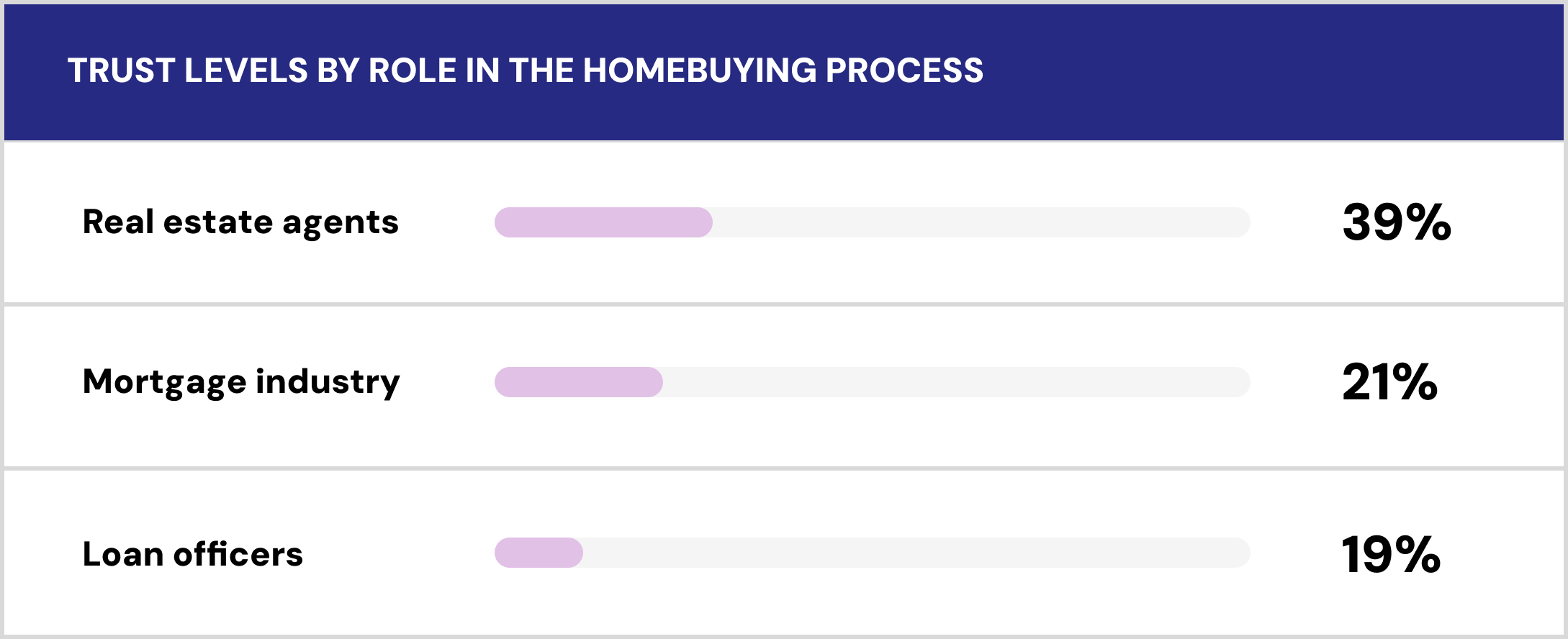
That 20-point gap between real estate agents and mortgage loan officers is striking and it is not necessarily a reflection of competence. It is more likely a reflection of visibility and familiarity.
Real estate agents are showing up where Gen Z already spends time—and doing it well. They are active across platforms like YouTube, Instagram, and TikTok, meeting buyers in the spaces they already trust and engage with daily.
YouTube alone accounts for 34% of where Gen Z spends their time online, and agents are there walking through home tours, showcasing neighborhoods, and making the process feel far less intimidating. On Instagram (20%), they’re sharing listings and testimonials in a way that feels aspirational, not transactional. And on TikTok (19%), they’re bringing personality into the process—romanticizing homes and making content that actually feels human.
By the time a buyer is ready to seriously engage, they may have been following an agent for weeks or even months. That familiarity creates a foundation of trust before the formal relationship even begins.
Mortgage loan officers, by contrast, often enter the picture later in the process. Their role is associated with financing, documentation, and qualification — topics that tend to feel more complex and less visible in consumer-facing content. But the trust gap is not fixed. It is an opportunity to become more approachable earlier in the buyer journey.
What trust actually looks like to Gen Z
When asked what would make them feel more confident working with a lender, Gen Z respondents were remarkably consistent. They want explanation, not just documentation. In fact, 53% said they want help understanding closing costs and fees—one of the most complex and often least transparent parts of the process.
They want to understand how their lender is compensated, what each fee covers, and what to expect at every stage of the process… ideally before they have to ask.
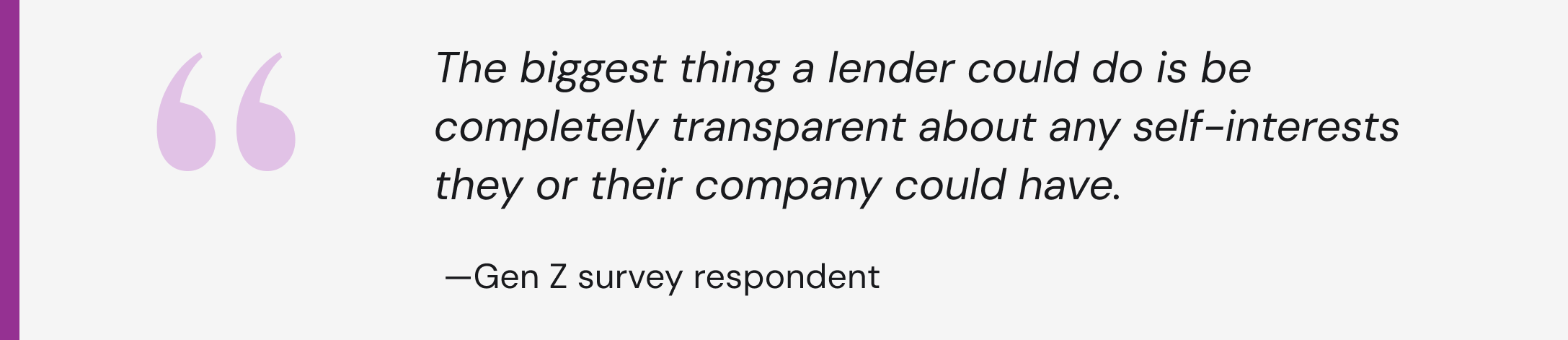
That is not the response of someone who is anti-lender. It is the response of someone who wants to feel like they are entering a partnership, not a transaction. When compensation, costs, expectations, and timelines are explained early and clearly, buyers are less likely to feel guarded — and that is when trust begins to take shape.
What this means for our industry
The distrust reflected in this data points to something deeper: uncertainty and a lack of familiarity with the homebuying process itself. Gen Z will not extend automatic trust based on title or tenure. Trust has to be earned, and it has to be earned early. For mortgage professionals, that means leading with education before persuasion, and making the mortgage process more visible, more understandable, and less intimidating from the start.
- Proactively address fees and timelines. Explain what each charge means and how compensation works before buyers feel the need to ask. Anticipating concerns signals honesty.
- Share a process roadmap early. A one-page overview sent after an introductory call sets clear expectations and demonstrates that the process is structured and transparent — not designed to catch buyers off guard.
- Show up consistently with educational content. When lenders regularly answer common questions, explain financing basics, and demystify the process on social media, they create familiarity in a way that feels helpful rather than promotional.
- Distinguish compliance from clarity. Delivering required disclosures is the floor, not the ceiling. Walking borrowers through documents in plain language is what converts anxiety into confidence.
As Gen Z enters its peak homebuying years, the lenders who build trust through operational transparency, not just brand messaging, will be in the strongest position to earn both their business and their referrals.
Guild Mortgage partnered with YouGov to survey U.S. adults within Gen Z about their attitudes toward homeownership, mortgage lending, and financial trust. The survey included both structured and open-ended responses to better understand emotional drivers behind buying behavior. Full methodology available upon request.